From Divine Feminine to Divine Mother: A Necessary Maturation
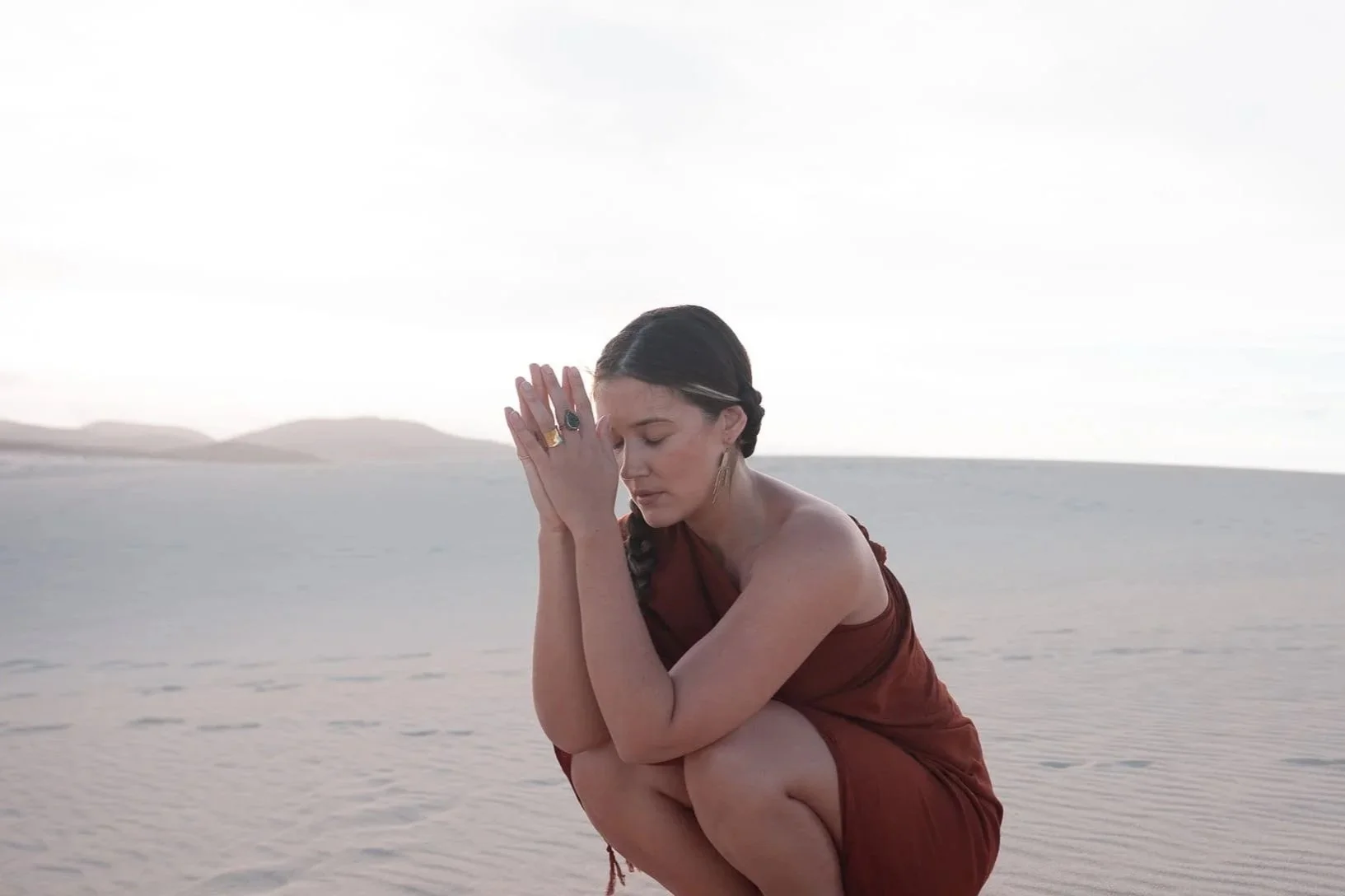
Sacred femininity is not performed — it is remembered.
When “Divine” Femininity Became Something to Perform
I never felt a resonant truth behind the New Age interpretation of this concept. It felt more like an invitation to belong to a spiritually acceptable version of the popular group in high school.
One that dresses in natural fabrics, speaks slowly, is a great lover, dances sensually, and still needs to be liked by everyone.
I found no real spiritual empowerment in what was being sold as divine feminine for a long time. Only another iteration of humans refining self-expression in order to be received, validated, and socially captivating.
Time has taught me that my resistance was not cynicism — it was discernment. By refusing paths that did not resonate, I eventually arrived at answers within myself that felt holy, grounded, and deeply peaceful.
And so the real question became:
Where do we, as women, actually learn what it means to be a Holy Woman?
How Religion Shaped Our Fear of Female Power
For over a millennium, womanhood in the Western world was shaped under a religious system that equated female power with danger.
The Christian Church — particularly during the Inquisition — did not merely regulate behavior; it regulated consciousness.
Women who embodied intuition, sensuality, autonomy, or spiritual authority were labeled heretical, hysterical, or sinful. Midwives, healers, mystics, and unmarried women became threats to a system that required obedience and hierarchy.
This was not a brief historical episode. It belongs to a long warfare on societal and psychological conditioning — one that taught women to distrust their bodies, silence their knowing, and outsource spiritual authority to male intermediaries of God.
But the trauma did not end when the trials ended. It lives on through inheritance, education, morality, and shame. And it still shows up in how women seek permission to exist freely today.
The Necessary — But Incomplete — Return to the Body
Given this history, it makes sense that modern feminine movements begin with reclaiming the body.
After centuries of violence and suppression… our voice, movement, sexuality, and expression are natural places of return. They are reparative to the damage, and they are necessary for our growth.
But they are not complete.
What concerns me is when liberation stops at expression — when embodiment becomes performance, and femininity becomes another identity to be curated; we work less for a consciousness to be embodied. Spirituality that remains external, aesthetic, or relational — rarely matures into a devotional path; one that is intimate and anchored in your personal relationship with God.
The Child as the Doorway to the Mother
Before embodying the Divine Mother, or say the divine feminine, something more vulnerable must first be met. Not the tantric lover. Not the lightworker priestess. But the child — the part of us that learned to survive inside walls that did not protect her innocence or deepened her spiritual truth.
Inner child work is a foundational pillar in my guidance because this archetypal layer remembers what existed before joy became fear, before love became transactional, before safety turned into survival.
Self-reparenting is not about fixing the past — it is about restoring inner sovereignty.
And it is through this restoration that the Divine Mother welcomes us home.
From Inner Child Healing to Divine Mother Consciousness
I could not end this essay without offering something practical.
A question I return to often is simple, yet radical:
What would the Divine Mother say?
Cultural references of what a “good mother” looks like are, in my experience, largely irrelevant. They are shaped by social survival, not spiritual truth.
So I turn to the source.
I commune. I pray.
When joy arises, I invite the Cosmic Mother to witness it. When grief appears, I place it at her altar — because it is not mine to carry alone.
She answers all of her sons and daughters who call Her name.
A soul’s longing is, at its core, a remembering — a return to the Womb of Consciousness where we once rested in complete safety. The world we experience is temporary.
What we return to is home.
Learning to recognize her voice begins with listening — through the art of asking sincere questions that allows her consciousness to move through you.
Walking This Path Together
This devotional relationship with the Divine Mother (and Father when embodying the Masculine) is woven everywhere throughout my work — and it lives at the heart of my signature group program Mujer Medicina.
This upcoming group container is an initiation into spiritual embodiment that is grounded, structured, and deeply human. A space for women who are no longer interested in performing femininity — but in inhabiting it with clarity, responsibility, and reverence. I end up speaking about this program in almost every article I write, because it is my core source of inspiration and tangible sanctuary I can invite you to join me in.
For now, let this reflection I shared with you today be an invitation to listen more closely.
Con mucho amor, and until next Sunday.
Nina